Hong Kong poll shock and lecturers begin strike
 Getty Images
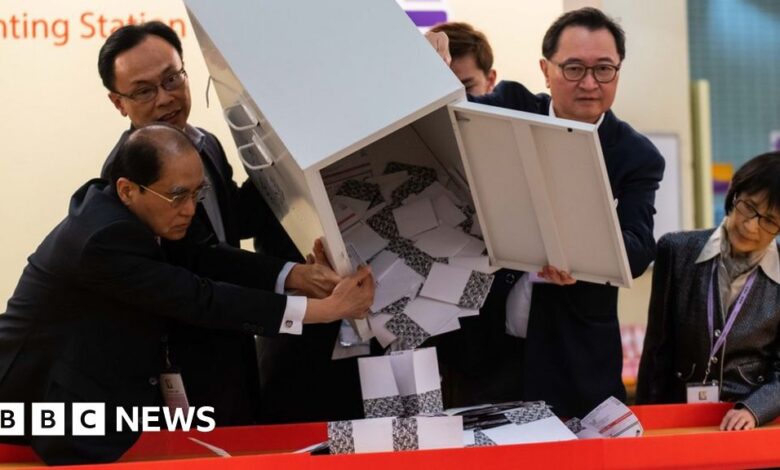
Hong Kong voters back pro-democracy movement
After months of unrest, anti-government protests and clashes, district council elections in Hong Kong have passed off peacefully. And the opposition pro-democracy movement has made unprecedented gains in the Chinese territory, according to early results. Local media suggests 17 of the 18 councils are now controlled by pro-democracy councillors. The government and Beijing had been hoping for a show of support from a “silent majority”. As our China correspondent Stephen McDonell puts it: “Nobody imagined such a comprehensive wipeout.”
District councillors have little power, dealing mainly with issues such as bus routes and rubbish collection, but these polls were being viewed as a referendum on embattled Chief Executive Carrie Lam’s leadership. Also, as 117 of the district councillors will sit on the 1,200-member committee that votes for the chief executive, the result could offer pro-democracy councillors a bigger say in who becomes the city’s next leader. Confused about the background to the unrest, which started over plans – now shelved – for a new extradition law? We explain in 100 – and 500 – words.
Labour plans rent controls
With the UK’s general election less than three weeks away, Jeremy Corbyn is highlighting Labour’s plans for a “private renters’ charter” in England, with a vow to “put bad landlords out of business”. A Labour government would cap rent increases at the inflation rate, bring in “open-ended” tenancies to protect tenants from unfair evictions and introduce an annual “property MOT”, with fines of up to £100,000 for sub-standard accommodation. The Residential Landlords Association says the result would be “serious rental housing crisis”.



University staff strike over pensions and pay
It will be all quiet in many UK university lecture halls today, with more than 40,000 lecturers and support staff expected to start an eight-day strike over workloads, real-terms pay cuts, a 15% gender pay gap and pensions changes. The universities say strikes are not the way forward and promise to try to minimise the impact. Some students tell the BBC the strike has left them unsure of exam dates. Sixty institutions are affected.
‘They think disability is almost worse than being dead’
By Kate Scotter, BBC News
To watch Tilly Moses perform her folk music on stage, there are no visual clues she’s disabled – although the message is there loud and clear in some of her lyrics. A year ago, Moses was diagnosed with fibromyalgia, a chronic condition that causes pain and fatigue. She says her fibromyalgia can leave her so tired she passes out.
It also affects her cognitive function and she can be in a lot of pain, and she sometimes has to use a walking stick or a wheelchair. “When people see me, because I’m young and I’m performing, people assume you can’t be those things and be disabled.” The misconception annoyed her and so she started writing songs about it.
What the papers say
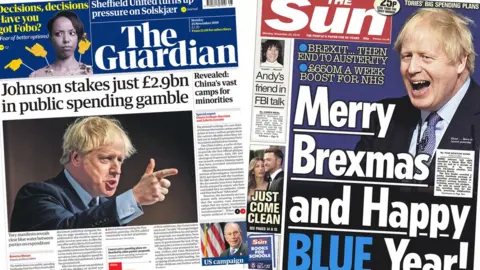
Most front pages focus on the Conservative manifesto launch, with both the Metro and Daily Telegraph quoting Boris Johnson saying “the stakes have never been higher”. The Sun predicts a “Merry Brexmas and Happy BLUE Year”, thanks to what the i calls a “safety-first” manifesto. The Financial Times also views it as a “low-risk pitch” to voters, with the Guardian saying the “modest” spending plans omit several pledges from Mr Johnson’s leadership campaign.
Daily digest
Blue Story Cinema chains pull gang film after ‘machete’ brawl
Prison camps Data leak reveals China’s ‘brainwashing’ system
Frozen 2 Disney sequel rakes in $127m at its US box office debut
If you watch one thing today
If you listen to one thing today
 Getty Images
If you read one thing today



Lookahead
09:30 Maurice Robinson, 25, appears at the Old Bailey in London on charges including 39 counts of manslaughter related to the discovery of the bodies of Vietnamese nationals in a lorry container.
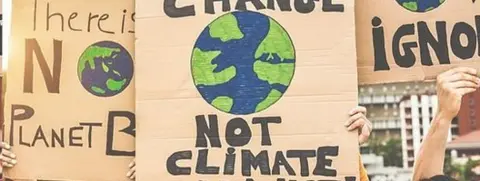
10:00 World Meteorological Organization releases annual bulletin showing concentration of greenhouse gases in the atmosphere ahead the opening of the UN Climate Change Conference in Madrid.
On this day
1963 An estimated 800,000 people line the streets of Washington to watch the funeral cortege of assassinated President John F Kennedy.
From elsewhere
Source link