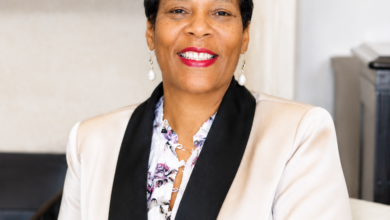
Redefining Leadership: How Leanne Cahill is Breaking the Retail Ceiling

In the landscape of modern retail, the absence of women at the helm of the UKs top listed companies remains a stark reality. Among the most compelling voices addressing this systemic imbalance is Leanne Cahill, the CEO of Bravissimo. Her journey from a working class upbringing in Sunderland to the boardroom of a sixty-million pound business is not merely a success story; it is a blueprint for navigating a corporate environment that has historically been designed without women like her in mind.
The Architecture of Ambition
Cahills formative years in the early 1990s were marked by rigid societal expectations. Recalling a pivotal career session during her secondary education, she describes an atmosphere where institutional bias was not hidden but mandated. The boys were directed toward manufacturing roles in local automotive plants, while the girls were steered toward garment factory work. This binary path served as a catalyst for her own ambition. Lacking professional role models and clear guidance, Cahill learned early that visibility is a prerequisite for possibility. She pursued a degree in mathematics, a choice that provided a logical foundation for her subsequent trajectory into finance and corporate leadership.
Throughout her rise through the ranks at firms such as Marks and Spencer and Travelex, Cahill encountered consistent reminders of the prejudice that persists in elite circles. Even today, her regional accent is often used as a litmus test by those who hold outdated views on what a CEO should sound like. Rather than internalizing these obstacles, she has utilized them to cultivate a profound sense of self-assurance. She posits that the experience of navigating such biases does not break a leader; it refines them, stripping away the noise of external perceptions to focus on the objective, strategic requirements of the business.
Resilience as a Strategic Asset
Cahills approach to leadership is inextricably linked to her experience as an individual with a limb difference. Her perspective on disability moves past the traditional narrative of overcoming adversity and instead focuses on the cognitive dividends of unconventional problem-solving. By being forced to find creative, efficient ways to navigate daily physical challenges, she developed a level of resilience and adaptability that is invaluable in the volatile retail sector. She argues that the corporate world often misses the point of diversity; it is not merely a matter of optics but a way to harness the unique capabilities developed by those who have had to exist outside the status quo.
Since assuming the role of CEO at Bravissimo in 2020, following her tenure as finance director, Cahill has applied this philosophy to the core of the brand. By focusing on a niche market that high-street retailers have largely neglected, she has championed a business model centered on customer confidence rather than convenience. Her leadership team, comprised predominantly of women, serves as a testament to the fact that when women are given the infrastructure to thrive, they do not just fill roles; they redefine the purpose of the organization.
Ultimately, the role of a leader today requires more than technical proficiency. It demands the courage to challenge institutional norms and the transparency to engage with failure as a vehicle for growth. As Cahill continues to steer Bravissimo toward a global footprint, her legacy is defined by a commitment to fostering environments where talent is judged by capacity rather than provenance. The future of corporate leadership rests on this shift in perspective, moving away from legacy structures toward a more inclusive, resilient, and visionary way of doing business.